

Granite is a common, hard, crystalline igneous rock primarily composed of quartz and feldspar, with mica and other minerals also present. It forms from the slow cooling of magma deep within the Earth’s crust, which gives it a coarse, grainy texture and contributes to its durability and heat resistance. Widely used in construction and landscaping for countertops, floors, and monuments, granite is known for its wide variety of colors, patterns, and its exceptional durability.
Formation and Composition
-
Intrusive Igneous Rock:Granite is a plutonic rock that forms when magma cools slowly beneath the Earth’s surface.
-
Minerals:Its main components are quartz (often grey and glassy) and feldspar (typically white or pinkish), along with smaller amounts of mica (shiny black or pale).
-
Texture:The slow cooling process allows the minerals to form visible crystals, giving granite its characteristic coarse-grained or “grainy” texture, from which it gets its name (from the Latin word “granum”).
Properties
-
Hardness:Granite is one of the hardest natural stones, ranking high on the Mohs scale of hardness.
-
Durability:It is highly resistant to scratches, heat, and other damage, making it an excellent material for high-traffic areas.
-
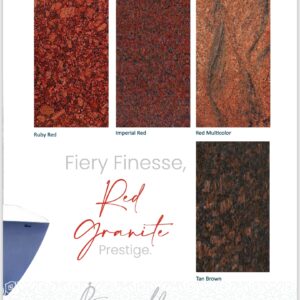
Variety:Granite comes in a wide range of colors, including white, black, pink, yellow, and green, each with unique mineral patterns and veins.
Uses
-
Architecture and Design:Granite is a popular choice for kitchen countertops, vanity tops, flooring, and wall cladding.
-
Landscaping:It is used for outdoor paving, walkways, and driveways due to its toughness.
-
Monuments:The stone’s durability and beauty make it ideal for monuments and sculptures.


Reviews
There are no reviews yet.